

Alternative to Meds Center Highlights Prozac Risks, SSRI Controversy, & Safer Paths for Fluoxetine Tapering and Recovery
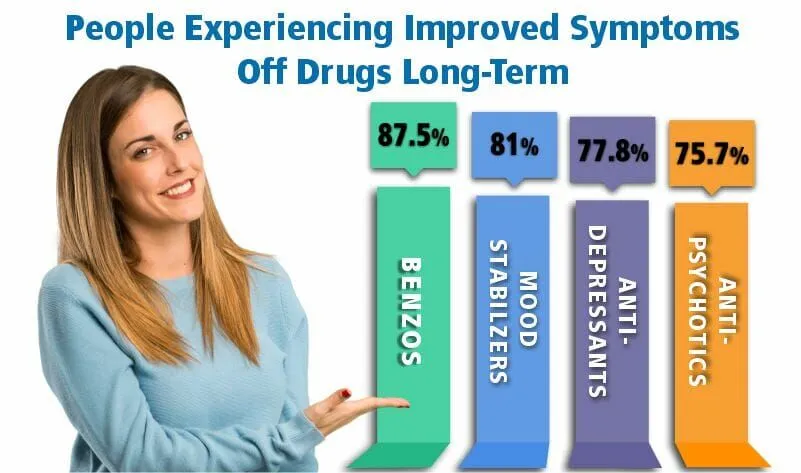
Chart illustrating reported long-term symptom improvement among individuals no longer using psychiatric medications across multiple drug categories.
Conceptual image encouraging individuals to research SSRIs carefully and practice due diligence when considering antidepressant medications.

Graphic referencing the “one pill fits all” concept often associated with antidepressant marketing, highlighting discussions around Prozac and SSRI use.
Sedona inpatient program emphasizes due diligence, withdrawal-aware care, and holistic alternatives for depression and anxiety support
Prozac is FDA-approved for several psychiatric indications, including major depressive disorder, obsessive-compulsive disorder (OCD), bulimia nervosa, and panic disorder. Fluoxetine is also approved for acute depressive episodes in bipolar conditions and for “treatment-resistant depression” when prescribed in combination with olanzapine, an antipsychotic medication—typically after multiple antidepressant trials have not produced adequate results.
“Marketing often frames Prozac as a straightforward path back to happiness and productivity,” said a representative of Alternative to Meds Center. “But many individuals experience side effects, emotional destabilization, or difficulty stopping. We want people to have a fuller picture—and safer support options—before they begin, change, or discontinue SSRIs.”
Due Diligence Matters—Especially With Long-Term Use
ATMC notes that many patients assume their prescriber will fully explain medication risks, withdrawal realities, and non-drug alternatives. However, individuals may not receive comprehensive guidance about potential adverse reactions, drug-drug interactions, or the challenges associated with SSRI discontinuation—particularly after long-term use.
ATMC reports extensive clinical experience helping clients taper and withdraw from antidepressants and other psychiatric medications. The center also emphasizes that many people benefit from combining gradual tapering with non-toxic, whole-person supports aimed at improving sleep, mood stability, and overall physical resilience.
Understanding SSRIs and Serotonin-Related Concerns
Fluoxetine is classified as a selective serotonin reuptake inhibitor (SSRI), designed to alter serotonin signaling. Serotonin is a naturally occurring neurotransmitter with wide-ranging influence throughout the body, affecting not only mood but also digestion, sleep, metabolic function, and numerous regulatory processes.
ATMC emphasizes that no medication “creates” serotonin; instead, SSRIs manipulate neurotransmitter transmission. The center also notes that the serotonin-based explanation for depression has been a subject of ongoing scientific debate, with some researchers questioning whether serotonin levels are a primary cause of depression or a downstream effect influenced by multiple biological and environmental factors.
Serotonin Syndrome Awareness and Medication Interactions
ATMC highlights the need for public awareness of serotonin syndrome, a potentially life-threatening toxicity state that can occur when serotonin activity becomes excessive—particularly when multiple serotonergic agents are combined, when doses are changed, or in overdose scenarios. The center urges individuals to seek immediate medical care if severe symptoms emerge, and to avoid combining serotonergic supplements or medications without medical direction.
The center also notes that certain combinations—such as mixing SSRIs with MAOIs or other serotonergic agents—can elevate risk, making careful medication reconciliation and monitoring essential.
Prozac Risks, Side Effects, and Black Box Warnings
Like other SSRIs, Prozac may produce side effects that range from mild to severe. Commonly reported issues include nausea, sleep disruption, fatigue, and increased anxiety—particularly early in treatment. Some individuals report agitation, akathisia, mood volatility, hostility, tremors, and sexual dysfunction. Prozac also carries a black box warning related to increased suicidal thoughts in some younger populations, underscoring the importance of close monitoring during initiation or dose changes.
ATMC encourages individuals to report emergent suicidality, extreme agitation, confusion, or other alarming reactions to a medical professional without delay.
Withdrawal Considerations and the Importance of Gradual Reduction
Although Prozac’s metabolite has a long half-life—meaning it can remain active in the body for an extended period—ATMC emphasizes that gradual tapering is still commonly advised to reduce unnecessary discomfort and to minimize destabilization. The center notes that a longer half-life does not eliminate the possibility of withdrawal symptoms, which may include dizziness, digestive issues, flu-like symptoms, sleep disturbance, and mood disruption.
ATMC also cautions that medication switching—especially within the SSRI class—should be handled carefully to avoid dangerous drug-drug interactions while fluoxetine remains in the bloodstream.
Prozac, Zoloft, Luvox—Similar Class, Different Impacts
ATMC notes that Prozac (fluoxetine), Zoloft (sertraline), and Luvox (fluvoxamine) are often spoken about interchangeably because they share the SSRI classification. However, each has a different active ingredient and may affect individuals differently—including differences in side effect profiles, withdrawal patterns, and interaction risks. ATMC encourages patients to apply the same level of critical thinking and careful oversight to each medication decision, even when drugs appear “similar” by category.
Holistic Alternatives and Inpatient Support
Alternative to Meds Center provides inpatient programs designed for individuals seeking medically supervised tapering alongside integrative therapies and lifestyle-based alternatives. ATMC’s model is focused on addressing underlying contributors to symptoms—such as sleep disruption, nutritional imbalance, toxin exposure burden, chronic stress load, and microbiome health—rather than relying solely on medication-based symptom suppression.
“Our goal is to help clients stabilize safely,” the ATMC representative added. “That includes careful tapering protocols when appropriate, education, and holistic supports that empower long-term well-being without ongoing dependence on prescriptions.”
For more information about Alternative to Meds Center’s Prozac tapering support, antidepressant withdrawal programs, and holistic mental wellness options, contact the admissions team.
Alternative to Meds Center
Alternative to Meds Center
+1 877-503-0770
email us here
Visit us on social media:
LinkedIn
Instagram
Facebook
YouTube
TikTok
X
Other
Legal Disclaimer:
EIN Presswire provides this news content "as is" without warranty of any kind. We do not accept any responsibility or liability for the accuracy, content, images, videos, licenses, completeness, legality, or reliability of the information contained in this article. If you have any complaints or copyright issues related to this article, kindly contact the author above.
